How can we help you today?

myKN
Quote, book and get full control of your shipments.
Get an instant quote
Talk to an expert
We help you to navigate through your logistics questions.
Get in touchmyKN
Quote, book and get full control of your shipments.
Get an instant quote
Talk to an expert
We help you to navigate through your logistics questions.
Get in touchProtect your margins before the next disruption hits your beauty supply chain
Ingredient shortages, packaging constraints and shifting trade rules are testing beauty brands. Discover how to build a supply chain that holds up under pressure.
Key Takeaways
Beauty products logistics combines fast product launches, fragile formulations and tightening packaging regulations, making it more exposed to disruption than standard consumer freight.
Supply chain disruptions lasting longer than a month happen roughly every 3.7 years. It can also cost an organization up to 45% of one year's profit over a decade.
Cosmetics accounted for more than a third of all EU product safety alerts in 2025, the highest level recorded since the system began in 2003.
Real-time tracking and AI-driven demand forecasting are becoming standard tools for beauty brands managing volatile, trend-driven demand.
Selecting a logistics partner on long-term capability rather than rate alone helps beauty brands reduce disruption and protect launch timelines.
Beauty products logistics are experiencing unprecedented pressure. From ingredient volatility to packaging capacity constraints, potential issues are converging on an industry that runs on fast launches and tight margins. Brands that once treated logistics as a back-office function now find that it’s shaping how a new product reaches shelves on time.
The category structure makes it especially exposed. A single SKU can depend on a fragile natural extract, a recyclable packaging component on backorder, and a multi-country manufacturing footprint, all moving toward one launch date. Disruption anywhere in that chain shows up as a delayed shelf reset or a missed seasonal window.
For procurement and supply chain leaders, the question is whether your supply chain can absorb disruption without losing a launch, a customer or a margin point. This guide looks at what makes beauty products logistics distinct, the risks of getting it wrong, and the practical steps that build resilience.
What supply chain resilience means for beauty brands
Three factors set beauty apart from general consumer logistics:
Formulations often depend on a small number of qualified ingredient sources, so a single supplier disruption can stall multiple SKUs at once.
Packaging increasingly uses recyclable, refillable or biobased materials, where rising demand has put pressure on manufacturing lead times.
Regulatory requirements also vary sharply by market, with the EU, the United States and parts of Asia each applying different cosmetic safety and labeling rules.
Resilience in beauty products logistics means your supply chain can absorb a shock and keep launches, replenishment and compliance on track. That goes beyond simply having backup suppliers. It means getting a clear, current picture of where ingredients and packaging components sit at any point. It also means rerouting or replanning quickly when one link in the chain fails.
Multi-region distribution adds a further layer. A brand launching simultaneously in North America, Europe and Asia needs customs and compliance handled consistently across each market.
Resilience means building that consistency in before a disruption forces you to improvise.
The cost of disruption for beauty and cosmetics supply chains
Major supply chain disruptions lasting longer than a month occur roughly every 3.7 years on average, and over a decade they can cost an organization up to 45% of one year's profit. For a category built on frequent launches and seasonal collections, that exposure compounds quickly.
A delayed ingredient shipment can push back an entire launch window. A packaging shortfall can force a reformulation under pressure. A customs delay in one market can leave shelves empty during the exact weeks a campaign is driving demand.
For beauty brands sourcing ingredients and components across multiple regions, that pressure lands on margin at exactly the moment competition over price is intensifying.
Tariff volatility is adding a newer layer of cost. In 2025, 82% of supply chain leaders said tariffs were affecting their supply chains, with many seeing direct increases in supplier and material costs, according to McKinsey's 2025 supply chain risk pulse survey.
The result is a cost environment where the margin for supply chain error is narrower than it has ever been.
In 2025, 82% of supply chain leaders said tariffs were affecting their supply chain.
McKinsey and Company
What are the biggest supply chain disruptions affecting global logistics in 2026?
Tariff changes are reshaping cost structures across major trade lanes, with supply chain leaders reporting direct impact on their operations. Extreme weather is also a large cause of supply chain disruption. In 2025, it topped the list of supply chain disruptions for the first time since 2017, according to the BCI Horizon Scan Report 2025.
Ongoing geopolitical volatility also continues to affect manufacturing and shipping routes across Asia, Europe and North America.
Ingredient sourcing often runs through regions exposed to climate volatility, while packaging materials cross multiple borders before reaching final assembly.
Regulatory complexity compounds the picture. Cosmetics accounted for more than a third of all alerts in the European Commission's 2025 Safety Gate report, the highest level recorded since the system began in 2003. Brands operating across markets need logistics partners who track these changes continuously rather than reactively.
Building digital resilience in beauty products logistics
Two technologies do the most to protect a beauty supply chain from surprises: real-time tracking and AI-driven demand forecasting.
Together, they give your team the lead time to act before a delay or a demand spike reaches the shelf.
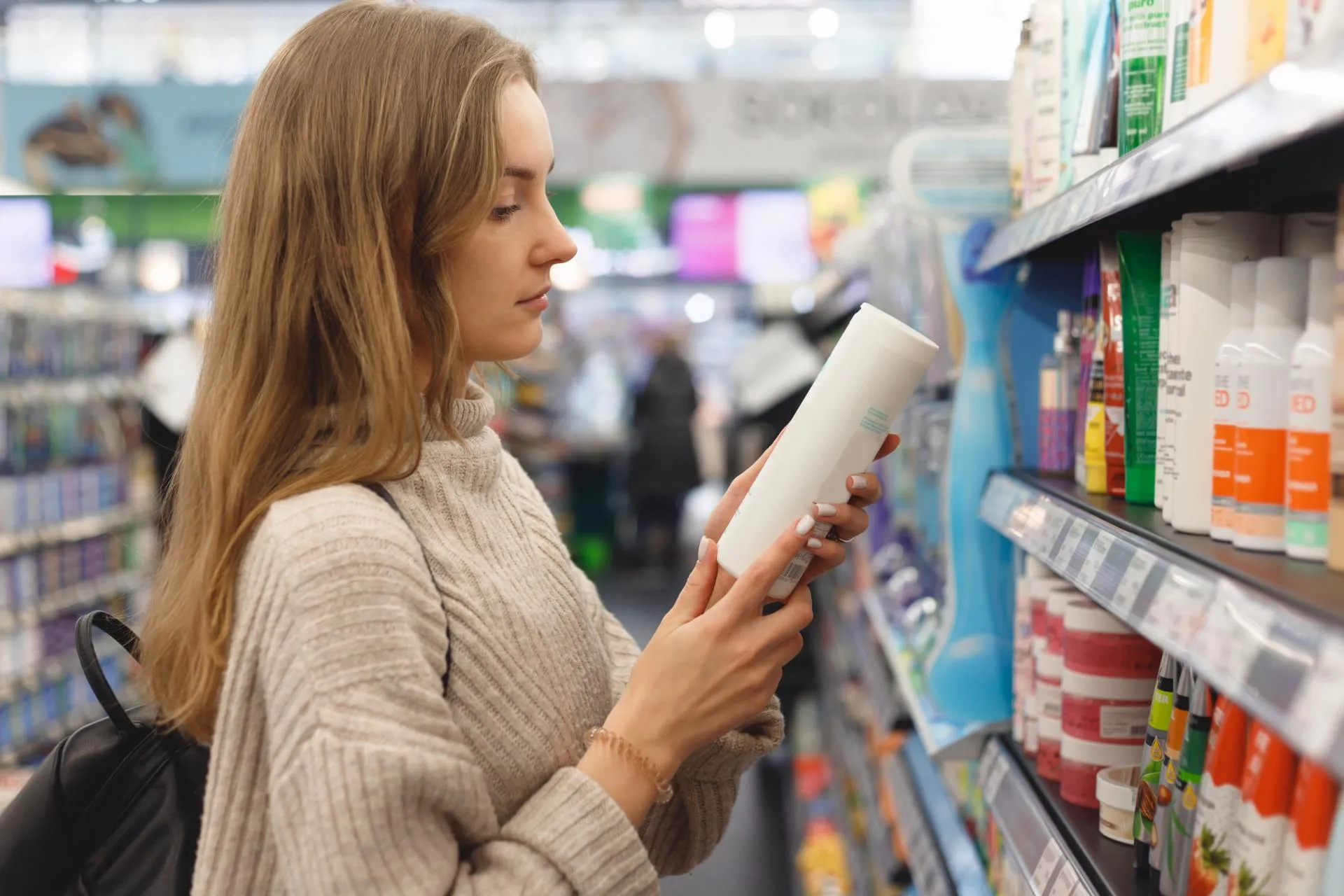
What supply chain visibility tools help beauty brands track shipments in real time?
Real-time tracking tools give your team a continuous read on where ingredients, packaging and finished goods sit across the network. The most useful options include digital dashboards that consolidate shipment status across ocean, air and road. Add to these control towers that flag delays before they reach production and predictive alerts that surface a likely disruption days in advance.
A two-week delay on a general consumer good is an inconvenience. The same delay on a seasonal fragrance launch can mean missing the selling window entirely. This is why these tools matter more in beauty than in most other categories.
How is artificial intelligence being used to forecast demand in beauty supply chain management?
Beauty demand is hard to predict. A product can sell steadily for months, then spike overnight after a single viral mention. Traditional forecasting models built on historical sales data can struggle to keep up.
AI-based forecasting closes that gap by analyzing social trends, search activity and promotional calendars alongside historical sales. Gartner projects that 70% of large organizations will adopt AI-based demand forecasting by 2030.
McKinsey research shows applying AI-driven forecasting to supply chain management can reduce errors by 20% to 50%, cutting lost sales and product unavailability by up to 65%.
For beauty brands managing thousands of SKUs across multiple markets, even a modest accuracy gain meaningfully reduces both stockouts and excess inventory.
Evaluating a beauty logistics partner
Choosing the right logistics partner does more to protect your launch calendar than any single technology investment. The right beauty logistics partner provides:
1. Category experience
Examples from active beauty or cosmetics customers, not just general consumer goods.
2. Network reach
Direct operations across your sourcing and distribution regions, rather than reliance on subcontracted gaps.
3. Digital integration
Shipment data that connects directly to your planning and inventory systems.
4. Regulatory and customs expertise
A track record of managing cosmetic-specific compliance across markets.
5. Business continuity
A documented plan for how the partner responds when a shipment, supplier or production schedule is disrupted.
What should I look for when selecting a 3PL fulfillment partner for my
e-commerce business?
Ask for proof, not assurances. A capable partner can show you live examples of beauty or cosmetics customers, explain exactly how shipment data reaches your team and describe what happens when a regulatory requirement changes mid-launch. Vague answers about network coverage or generic claims of broad global reach are a signal to keep evaluating other providers.
The partner you choose is making a structural decision for your supply chain. Selecting on long-term capability protects more value over time than selecting on rate alone.
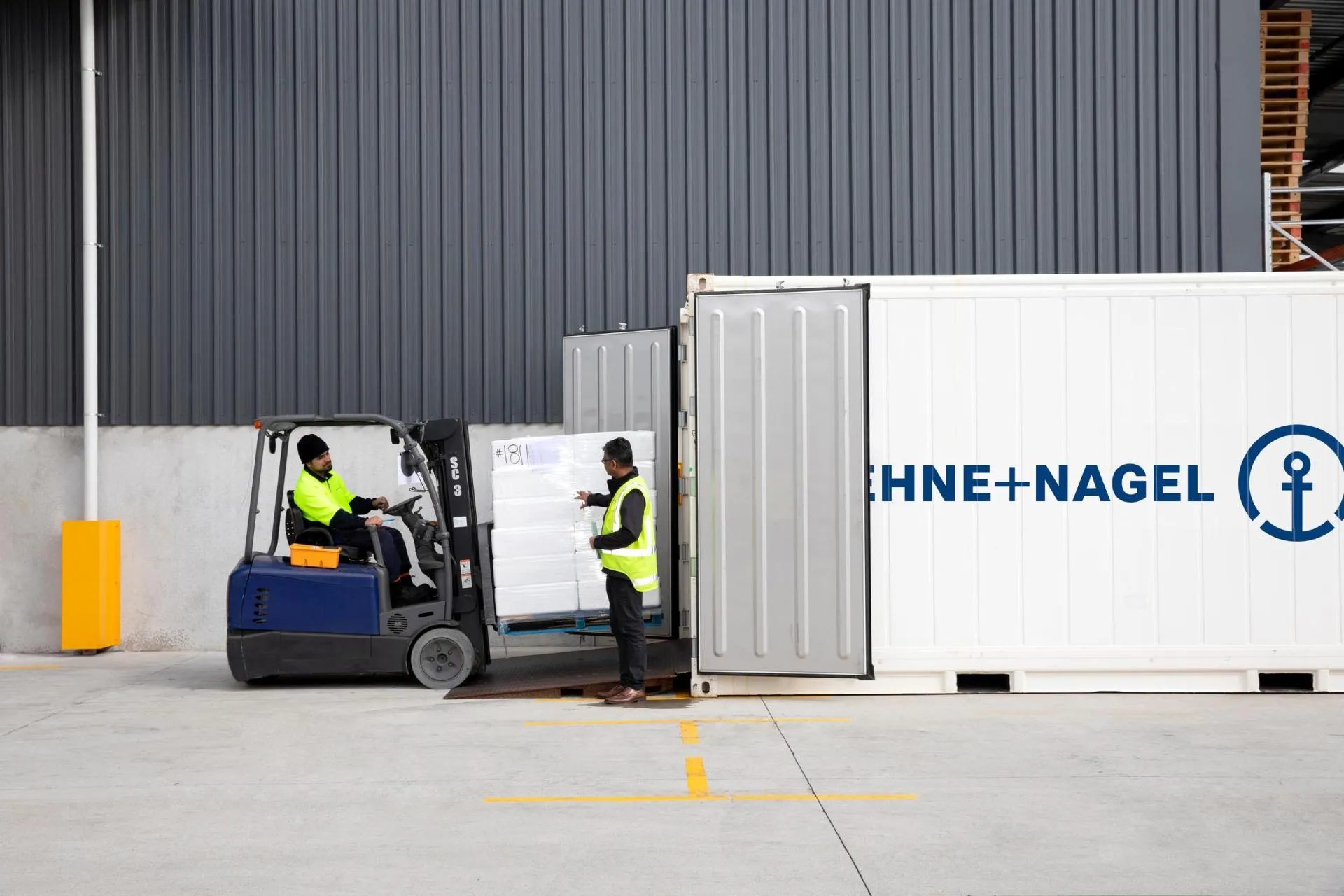
Best practices for staying ahead of disruption
1. Build flex capacity into contracts
Negotiate surge capacity and flexible space commitments with your logistics providers before you need them, not during a crisis. A standing option costs less than an emergency booking.
2. Run disruption stress tests
Walk through a major disruption scenario, such as a port closure or an ingredient recall, before it happens. Identify exactly which decisions your team needs to make and who owns them.
3. Distribute risk across your network
Concentrating production or distribution in a single facility or region creates a single point of failure. Spreading critical capacity across more than one location reduces that exposure.
4. Review every disruption afterward
Treat each disruption as a source of data. A short review covering what triggered it and how long resolution took sharpens your response the next time.
How Kuehne+Nagel supports resilient beauty supply chains
Kuehne+Nagel helps beauty and cosmetics brands manage the full path from ingredient sourcing to finished product distribution by combining global reach with category-specific expertise across major consumer goods corridors.
The myKN digital platform gives your team shipment booking, real-time tracking and shipment visibility across every transport mode from a single interface.
As regulatory requirements tighten across markets, Our customs clearance teams monitor changes continuously, helping reduce the risk of compliance delays at the border.
Kuehne+Nagel is named a Leader in the 2026 Gartner® Magic Quadrant™ for Third-Party Logistics for the 11th consecutive year — a recognition reflecting consistent performance across multimodal freight, industry-specific capability and supply chain technology.
FAQs
Contract logistics is a long-term agreement where a provider manages an ongoing set of supply chain functions, such as warehousing, distribution and inventory flow, under a defined scope and service level. Transactional logistics covers single, one-off shipments booked as needed, with no ongoing commitment. Beauty brands managing frequent launches often benefit from contract logistics because it builds consistency and accountability into the relationship rather than renegotiating terms shipment by shipment.
Response speed depends on how much flexibility is already built into your logistics contracts before the spike happens. Brands with pre-negotiated surge capacity and AI-supported demand sensing can adjust production and shipping within days. Brands without it are left negotiating emergency freight rates during the exact window when speed matters most.
Sustainable packaging formats, including recyclable and refillable options, often carry longer manufacturing lead times than conventional packaging. Brands that build these timelines into their launch planning, rather than treating packaging as a late-stage variable, reduce the risk of last-minute delays.
Beauty products combine fragile formulations, multi-source ingredients and frequent regulatory change across markets. General freight providers may handle the transport but miss the coordination needed to keep launches and replenishment cycles on schedule. Category-specific expertise helps anticipate where disruption is most likely and plan around it.
Act immediately to halt distribution of the flagged product and notify your logistics and compliance teams so affected shipments can be located and held. Brands working with a logistics partner experienced in cosmetics-specific compliance, such as Kuehne+Nagel's customs and regulatory teams, can trace and contain affected inventory faster across multiple markets.