How can we help you today?

myKN
Quote, book and get full control of your shipments.
Get an instant quote
Talk to an expert
We help you to navigate through your logistics questions.
Get in touchmyKN
Quote, book and get full control of your shipments.
Get an instant quote
Talk to an expert
We help you to navigate through your logistics questions.
Get in touchKeep automobile production moving smoothly
Your logistics partner shapes production continuity, inventory flow and delivery. Choose wisely to keep your automotive supply chain resilient as sourcing networks and vehicle technologies evolve.
Key Takeaways
Automobile logistics requires specialized expertise across inbound parts, finished vehicle distribution and regulatory compliance.
Electric vehicle production introduces new logistics requirements, including lithium battery handling, high-value cargo protection and evolving dangerous goods regulations.
Procurement teams should evaluate logistics providers on multimodal capability, automotive experience, visibility technology, customs expertise and operational resilience.
Selecting a partner on long-term capability rather than transport rates helps reduce disruption, improve production continuity and support future expansion.
Strong governance, digital visibility and scalable operations become increasingly valuable as sourcing networks regionalize and production volumes change.
Automotive supply chains have never required more from procurement teams. Original equipment manufacturers (OEMs) are entering new markets, launching electric vehicle programs and rethinking sourcing after years of disruption. Logistics is now central to their success.
This shift has elevated logistics from an operational function to a strategic procurement decision. Coordinating inbound parts for just-in-time (JIT) and just-in-sequence (JIS) production is one part of it. So is managing customs across trade lanes and distributing finished vehicles through specialist networks. Each stage has a direct bearing on whether production runs on schedule.
The right logistics partner gives procurement teams the operational grip to respond when conditions change.
Learn how to evaluate automotive logistics partners that support production continuity, supply chain resilience and long-term growth.
This guide explains what makes automotive logistics operationally distinct and how electric vehicle production is reshaping logistics requirements.
Why automotive logistics differs
from other supply chains
Unlike standard freight operations, automobile logistics depends on close coordination between manufacturers, suppliers, carriers, customs authorities and distribution partners. Every handoff influences production continuity and customer satisfaction, making operational consistency as important as transportation capacity.
Automobile logistics combines two highly specialized supply chain operations: inbound parts logistics and finished vehicle logistics. Both demand precision, visibility and industry expertise that extend well beyond general freight forwarding.
Inbound parts logistics keep production lines supplied with thousands of components arriving from suppliers around the world. Automotive manufacturers increasingly rely on JIT and JIS production, where deliveries arrive within tightly controlled production windows. A delayed shipment can interrupt assembly schedules and increase manufacturing costs, affecting customer delivery commitments.
Finished vehicle logistics begin once production is complete. Vehicles move through processing centers for inspections, accessory installation and software updates. Here's where required and market-specific preparation takes place before they travel by road, rail or Roll-on/Roll-off (Ro-Ro) vessels to distribution centers and dealerships.
Throughout the journey, providers must protect high-value cargo while maintaining visibility and minimizing damage.
Cargo characteristics further increase complexity. Automotive supply chains move oversized body panels, powertrain components, electronics, finished vehicles and, increasingly, lithium-ion batteries.
Each shipment type requires different handling procedures, packaging standards and regulatory controls.
Additional operational challenges
Regulatory compliance
Lithium batteries present one of the fastest-changing compliance areas for the industry. The International Air Transport Association (IATA) regularly updates its Dangerous Goods Regulations (DGR) annually for air transport, while the European Agreement concerning the International Carriage of Dangerous Goods by Road (ADR) follows a two-year revision cycle. Procurement teams benefit from working with providers that actively monitor regulatory updates and apply them consistently across international operations.
Global sourcing and transport
Global sourcing strategies add another layer of complexity. Vehicle production often spans multiple regions, with components sourced from Asia, Europe and North America before final assembly.
As manufacturers diversify their global supplier networks to improve resilience, logistics providers need established operations across major automotive corridors. Customs expertise and multimodal transport capability are equally essential for continuity.
Supply-chain disruptions cost the average organization 45% of one year's profits over the course of a decade.
McKinsey & Company
How EVs and new mobility are reshaping automotive logistics
The transition to electric vehicles is changing customer expectations for automotive logistics providers. Production volumes are rising. So are the regulatory and operational demands that come with them.
Battery logistics for EVs sits at the centre of that shift. Lithium-ion cells, modules and packs are classified as dangerous goods under international transport regulations. Moving them safely requires trained personnel, compliant packaging and accurate documentation. Regulatory requirements are also constantly evolving, making continuous monitoring essential.
McKinsey projects global battery electric passenger vehicle demand will grow sixfold between 2021 and 2030, from 6.5 million to around 40 million annual sales.
Electrification is one driver of complexity. Regionalisation is another. OEMs are moving production closer to end markets to reduce geopolitical exposure and shorten lead times. New manufacturing investment across North America, Central and Eastern Europe and Southeast Asia means components now cross more borders before reaching final assembly.
The global battery value chain is expected to grow by approximately 27% annually through 2030, with mobility applications accounting for the majority of demand.
McKinsey & Company
Procurement criteria and the right questions to ask
Selecting an automobile logistics partner involves more than comparing service portfolios or freight rates. A structured evaluation helps identify providers that can support your business through production changes, supply chain disruptions and long-term network expansion.
When developing your request for proposal (RFP), evaluate providers across five core areas:
Understand where the provider operates directly and where services rely on external partners. Direct operations often provide greater visibility, faster decision-making and more consistent service across critical automotive corridors.
Request examples of current automotive programs that reflect your operational requirements. Experience supporting JIT and JIS production, finished vehicle logistics and complex international supply chains demonstrates practical capability beyond general freight expertise.
Review how shipment information is captured, shared and integrated with your existing systems. Visibility should extend across transport modes and provide timely alerts that help your teams respond before operational issues affect production.
Automotive logistics depends on consistent customs compliance, accurate trade documentation and effective management of dangerous goods where applicable. Ask providers how regulatory updates are monitored, communicated and incorporated into daily operations.
Every logistics provider experiences disruption. The key differentiator is how quickly they recover. Ask prospective partners to explain how they manage transport delays, supplier interruptions, port congestion or sudden production schedule changes. Their response should demonstrate structured governance, defined escalation processes and measurable operational performance.
Procurement questions worth asking
Red flags during provider evaluation
Include these questions during your evaluation process:
Which automotive manufacturers do you currently support, and in which regions?
How do you measure JIT and JIS delivery performance?
What visibility capabilities are available across every transport mode?
How are customs, trade compliance and dangerous goods managed internally?
What contingency plans activate when production schedules change or transport disruptions occur?
A provider's answers should demonstrate measurable capability, structured governance and continuous investment in automotive logistics. These indicators often provide a stronger picture of long-term performance than transport rates alone.
Watch for responses that focus primarily on transportation capacity while providing limited detail on governance, visibility or automotive-specific expertise. Other warning signs include vague descriptions of network coverage, limited examples from active automotive customers and inconsistent approaches to customs or dangerous goods compliance.
Selecting the right partner is ultimately about confidence. Providers that combine operational experience with transparent governance, measurable performance and continuous investment are better equipped to support your supply chain as production requirements evolve.

RFP checklist
Before selecting a logistics partner, confirm:
Automotive customer references
JIT/JIS experience
Customs expertise
Dangerous goods capability
Visibility platform
Business continuity plan
Performance KPIs
Governance model
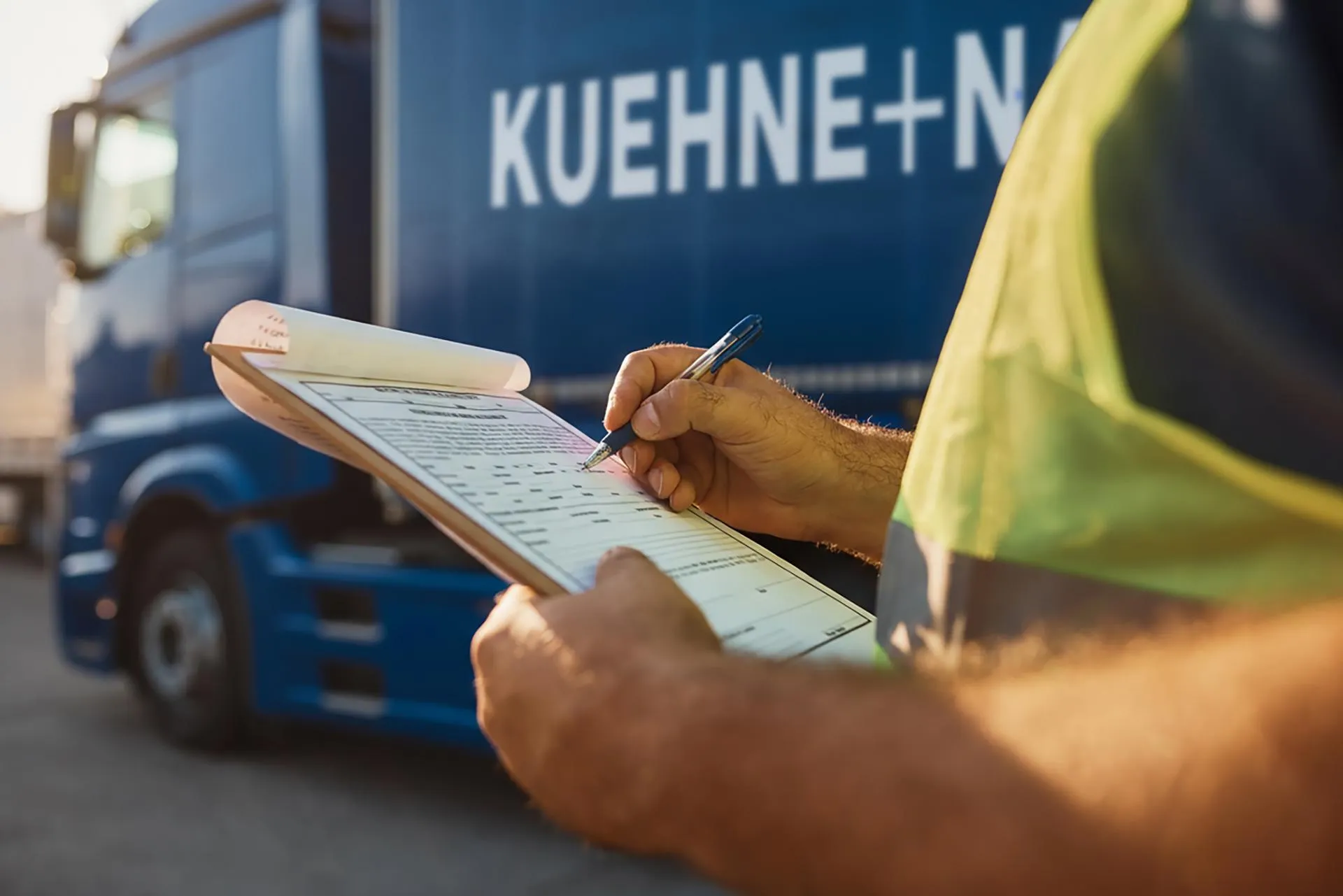
How Kuehne+Nagel supports automotive OEMs
Kuehne+Nagel helps automotive manufacturers manage complex supply chains, from inbound parts logistics to finished vehicle distribution. The company combines global reach with local expertise across major automotive production corridors.
Automotive specialists support JIT and JIS deliveries, multimodal transportation, customs management and finished vehicle logistics, helping maintain production continuity and improve supply chain visibility. As electric vehicle production expands, Kuehne+Nagel also supports the transportation of lithium batteries and other regulated cargo through dedicated dangerous goods expertise and compliant transport processes. and compliant transport processes.

FAQs
Automobile logistics supports highly synchronized manufacturing and distribution processes where timing, visibility and product handling are critical. Providers coordinate inbound parts, finished vehicles and aftermarket shipments while meeting industry-specific requirements such as JIT and JIS delivery, customs compliance and multimodal transport. The result is a logistics network designed around production continuity rather than simply moving freight.
Look for a provider with proven automotive experience, a strong multimodal network, customs and trade expertise, digital shipment visibility and the ability to scale with your business. Ask for examples from active automotive programs and understand how the provider manages disruptions, regulatory changes and production fluctuations before making a decision.
Electric vehicles introduce new logistics requirements because lithium batteries are regulated for transport under international dangerous goods rules. Manufacturers also need logistics partners that can support evolving production networks, changing supplier locations and greater visibility across increasingly complex global supply chains.
The most effective KPIs reflect operational outcomes rather than transport activity alone. Monitor JIT delivery performance, lead time reliability, shipment visibility, customs clearance performance, vehicle damage rates and exception response times. Reviewing these metrics regularly helps identify opportunities for continuous improvement across the supply chain.
Real-time shipment visibility allows supply chain teams to respond more quickly when production schedules or transport conditions change. Access to accurate shipment information supports better planning, improves communication between suppliers and manufacturing sites, and helps reduce the operational impact of unexpected disruptions.