How can we help you today?

myKN
Quote, book and get full control of your shipments.
Get an instant quote
Talk to an expert
We help you to navigate through your logistics questions.
Get in touchmyKN
Quote, book and get full control of your shipments.
Get an instant quote
Talk to an expert
We help you to navigate through your logistics questions.
Get in touchAI and policy shifts are reshaping semiconductor supply chains
As supply chains transition from centralised global networks to regionalised ecosystems, demand for advanced semiconductors, cloud infrastructure, and data centre capacity continues to grow.
Key takeaways
Semiconductor supply chains are becoming localised.
Traditional logistics models are insufficient.
Localisation reduces deployment times but increases complexity.
Precise coordination and execution are required, especially at the last-mile/last-metre.
Logistics must now focus on local execution at a global scale.
Legacy global logistics models are inadequate to meet current market demands. The pressing issue for the semiconductor industry is not one of scale but of acceleration.
Combining global supply chain efficiency with faster, locally coordinated delivery and deployment can provide companies with the strategic advantage they need to maintain agility and remain competitive.
Are traditional supply chain models enough in the AI era?
The quantum leap that is occurring in supply chain design is primarily due to the growing constraints of time compression across the entire deployment chain.
For semiconductor fabs, securing equipment and critical components at the earliest possible stage is essential. Misalignment between equipment arrival and site readiness leads to idle assets and wasted capital.
This is causing a shift away from the traditional globalised logistical sequence of “Order → Deliver → Store → Install”. Instead, semiconductor equipment suppliers and manufacturers are concentrating on a more streamlined model of “Order → Deliver → Install”.
This model removes intermediate buffering stages that were previously used to absorb uncertainty, but also reduces tolerance for errors in planning, logistics, and execution. Precise coordination is required for it to be effective.
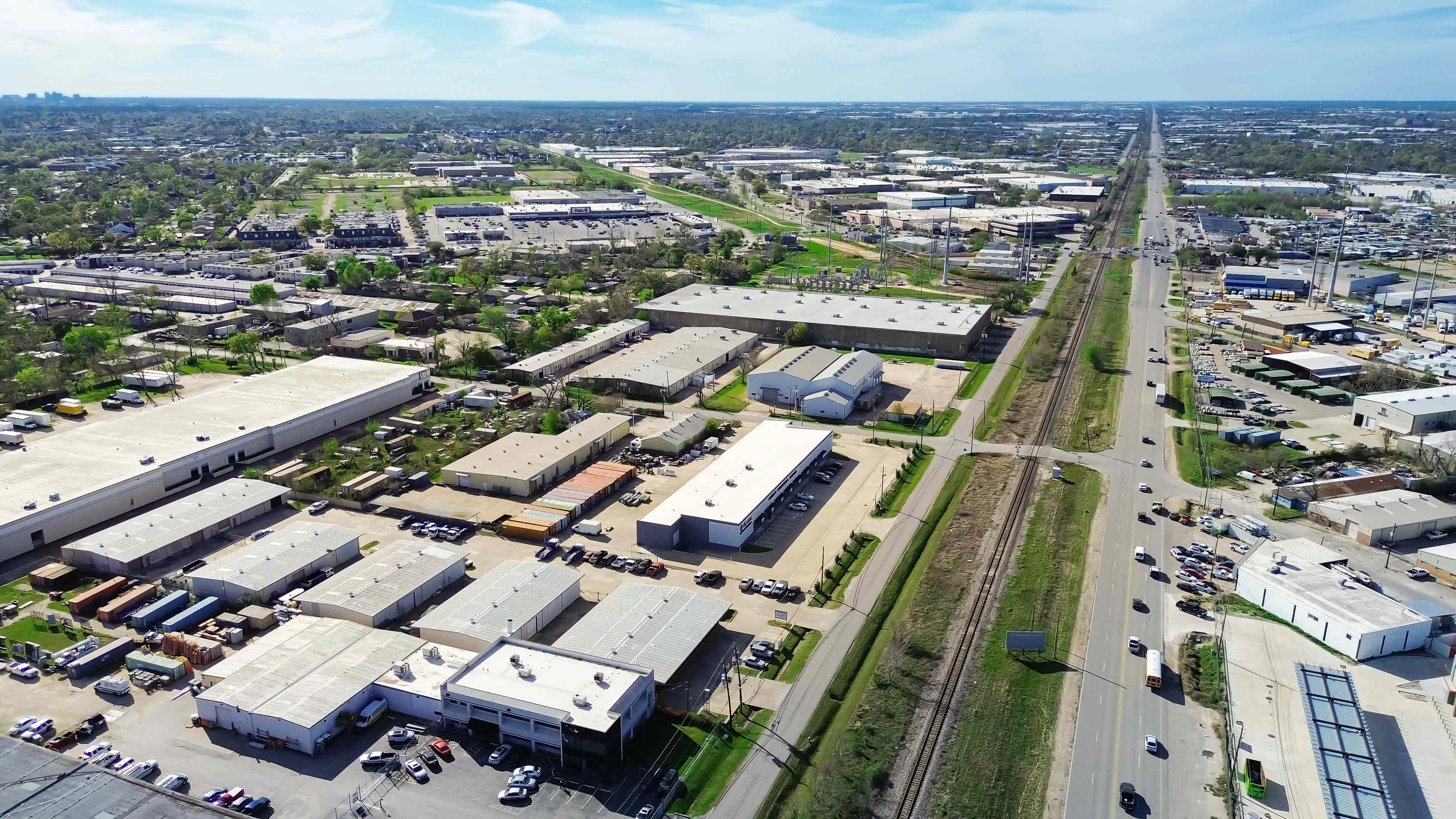
What are the structural shifts behind the move to regionalised supply chains?
Governmental policies, geopolitical developments, and the rise of AI technologies have driven the move to more localised supply chains.
Initiatives to address the supply chain vulnerabilities include the European Union’s Chips Act of 2023 and the United States’ CHIPS and Science Act of 2022. India, China, Japan, and South Korea have also introduced similar policy measures.
The aim is to establish domestic semiconductor manufacturing and reduce dependence on foreign suppliers. There is a shift away from highly concentrated, globally fragmented production networks toward more regionally anchored and strategically redundant ecosystems.
Selective localisation is key. Countries are rebuilding resilience by duplicating critical nodes, subsidising domestic capacity, and shortening supply chains for strategically important technologies.
The rising demand for AI technologies has accelerated efforts to reduce dependence on foreign manufacturing hubs and ensure sustained access to high-performance computing capacity.
Semiconductors are now viewed as strategic assets due to their importance in defence systems, telecommunications, infrastructure, and AI. The heavy reliance on a small number of external production hubs creates a vulnerability that can directly threaten a country’s economic and technological development.
The strategic rivalry over access to advanced semiconductor technologies has led to export restrictions, sanctions, and technology controls on critical inputs. Localisation is now seen as the best way to ensure continuity of supply.
Why localisation improves efficiency and adds complexity?
Localisation can significantly reduce lead times and shorten product development and deployment cycles. However, it also increases operational complexity. Companies must still coordinate multiple suppliers across different regions, often under tighter timelines and with less flexibility to absorb delays.
Speed gains at the macro level create increased precision requirements at the micro level. Precise coordination between suppliers, manufacturers, and logistics providers is critical. Even minor delays can disrupt tightly integrated production and deployment schedules.
And, ultimately, supply chains are still constrained by physical transport limitations.

How transport limitations impact semiconductor supply chains?
Chips, wafers, and manufacturing equipment still depend on air, road, and sea shipping networks that must operate within fixed speed limits. There is always a minimum transit time floor.
Highly sensitive capital equipment requires specialised logistics and handling processes. This can cause delays in loading and unloading cargo. Other disruptions, such as customs checks, weather issues, traffic, or capacity limits, are also often unavoidable.
Localisation may shorten distances and reduce certain delays, but it cannot eliminate the time required at the beginning and end of the physical journey. Cargo must still be collected, transferred to the relevant transport hub, cleared through any required customs procedures, and delivered to the customer site. These essential steps create an unavoidable minimum lead time, even within highly localised supply chains.
Improving performance does not result from the faster cross-border movement of goods. Instead, the optimisation focus must turn towards better local coordination and deployment readiness.
John Desmond BEng
Vice President, Global Cloud & Semiconductor Strategic Development at Kuehne+Nagel
Is the last mile the true performance driver?
Value and risk are concentrated at the final stage, where equipment is deployed and made operational. The last mile, and even the last metre, is now the critical control point.
How well the final stage is executed determines whether the entire supply chain can perform as intended. Successful delivery alone is not enough to guarantee operational readiness.
Several critical constraints must be managed:
Small misalignments at the final stage can lead to installation delays, idle equipment, and the need to reschedule specialised engineering teams. These disruptions can cause wider cascading effects that can push back overall deployment timelines and impact operations.
Traditional logistics approaches are primarily designed to move goods efficiently from one location to another. They are not designed to ensure precise synchronisation with installation readiness and on-site operational conditions.
Supply chains must be precisely planned with the last mile and the last metre in mind. Logistics companies must work with suppliers and manufacturers to ensure that delivery and deployment occur as a single, synchronised process.

Why supply chain orchestration matters?
Semiconductor supply chains can no longer be seen as a series of independent movements. Optimisation requires a fully integrated end-to-end process that facilitates the immediate deployment of critical equipment.
When supply chains are designed as a global-to-local network, cross-border transport can better align with regional distribution and last-stage delivery. Cargo can flow smoothly through each stage without delays or bottlenecks.
Strategically locating inventory, components, or equipment closer to end-use sites reduces lead times, improves responsiveness, and minimises the risk of disruption during final deployment.
All supply chain activities must be carefully coordinated so that delivery, installation, and operational readiness occur at exactly the right moment. Maintaining precise control of the last mile and last metre stage is imperative.
Direct, just-in-time delivery to the point of use avoids delays that can be associated with warehousing equipment. While this approach enables faster transition from delivery to deployment, it also increases reliance on precise timing and tightly coordinated logistics.
Localisation has shifted the role of logistics companies from simply transporting goods to coordinating highly precise, time-sensitive delivery and deployment processes. Logistics companies must now work closely with manufacturers, engineers, and site operators to ensure that delivery schedules align exactly with installation readiness.
Will 3D manufacturing replace global movement?
3D printing technologies are making localised or even on-site production increasingly viable for simple components such as O-rings, seals, fasteners, and other small parts. Manufacturers will no longer have to rely on traditional supply routes for low-complexity components. The need to hold certain categories of inventory in storage could be eliminated.
Despite the potential shift in supply chain design that 3d printing represents, highly complex or high-value semiconductor manufacturing equipment will continue to be produced through globally distributed, highly specialised production networks.
How to design for local execution at a global scale?
Logistics companies must be able to coordinate the global transportation of highly sensitive cargo with local execution infrastructure, city-level assets and precise last-mile/last metre control.
Supply chains should be designed with deployment timelines, site-specific constraints, and operational synchronisation requirements in mind. This requires close integration with end-use environments to ensure that delivery and installation processes are fully aligned.
Success is determined by the precision with which they are integrated into operational settings. Timing, coordination, and execution directly determine overall supply chain performance. The last mile is no longer simply a delivery stage, but a critical control layer within the supply chain.

Kuehne+Nagel views the localisation of the semicon supply chain as a design challenge, not as an operational adjustment.
This distinction is critical. Localisation changes the fundamentals of the supply chain structure. To maintain resilience, the architecture of supply chains needs to be redesigned. This redesign process will continue as semiconductor policies, such as the EU and US Chips Acts, reshape manufacturing footprints.
We have expanded beyond intercontinental air logistics and acquired local assets within urban centres to strengthen control over last-mile delivery operations. Our approach reflects the broader shift toward local execution at a global scale.
About the author
John Desmond BEng has built a career spanning semiconductor manufacturing, electronics services, and logistics. Having worked across Fab, Sub-fab, and EMS environments, and with more than 15 years in logistics following a decade as a semiconductor engineer, he brings a unique perspective on supply chain challenges.
As Vice President, Global Cloud & Semiconductor Strategic Development at Kuehne+Nagel, John helps shape strategic supply chain solutions that enable resilience, scalability, and long-term growth for customers in these fast-evolving industries.