How can we help you today?
myKN
Quote, book and get full control of your shipments.
Get an instant quote
Talk to an expert
We help you to navigate through your logistics questions.
Get in touchmyKN
Quote, book and get full control of your shipments.
Get an instant quote
Talk to an expert
We help you to navigate through your logistics questions.
Get in touchMonthly spotlight: Unlocking Insights
The great rebalancing: What the return to Suez means for shippers
Shorter routes are restoring effective capacity, but the transition remains uneven by trade, service, and sailing.
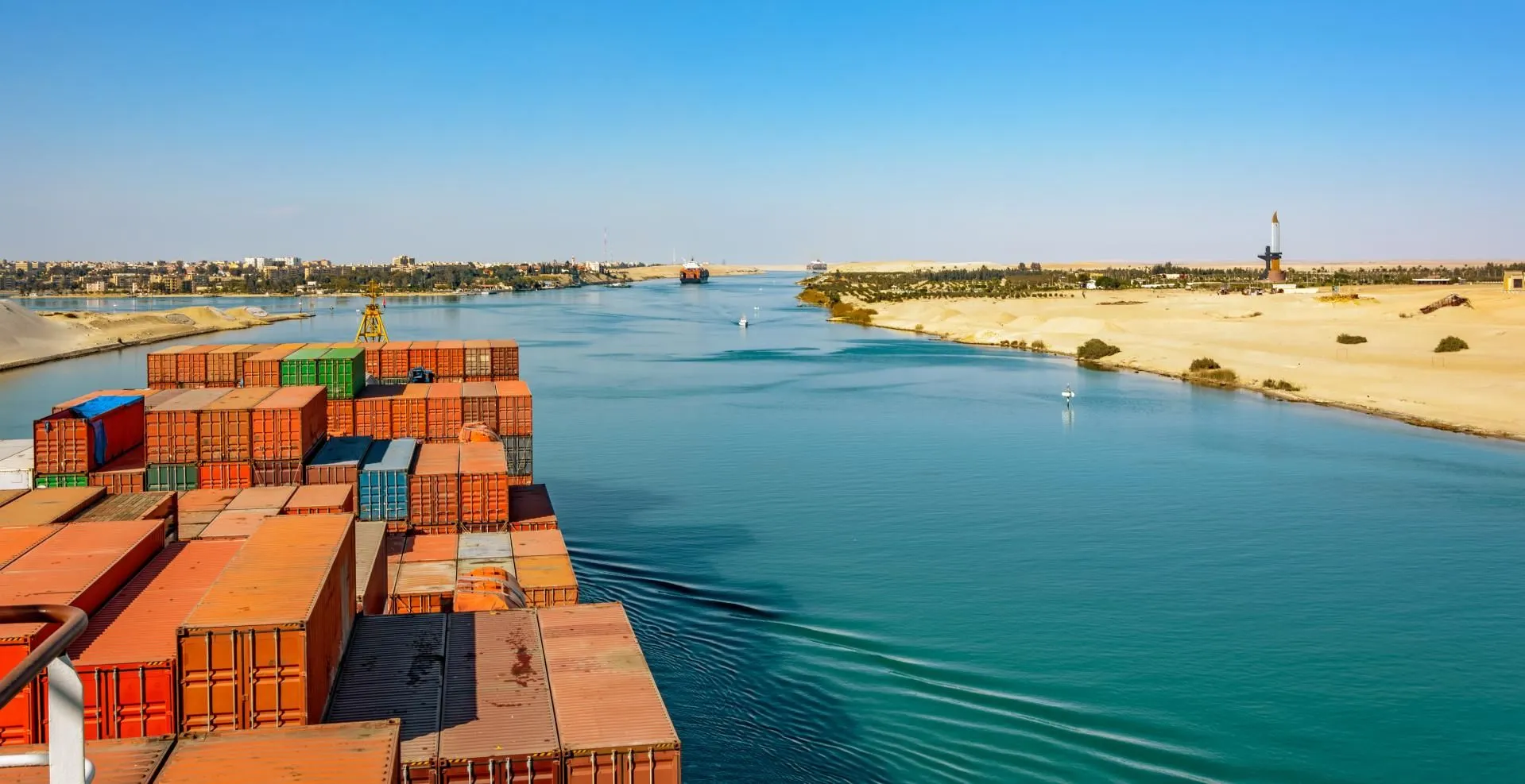
More Asia-Europe services are returning through the Suez Canal. The shift is releasing effective capacity, but it is not one market event: Mediterranean services are further advanced than North Europe, and actual routing can still differ by service and sailing.
The return is well underway, but uneven by trade
The strategic direction is clear: more Asia-Europe services are returning to the shorter Suez routing. The operating reality is more nuanced.
Current estimated share* of market capacity via Suez:
Asia to/from Mediterranean: 90%
Asia to/from Europe overall: 60–65%
Asia to/from Northern Europe: 45–50%
*These percentages do not guarantee the route of every service or sailing.
Shorter rotations are reshaping capacity, but the impact is uneven
As more services return to the shorter Suez routing, vessels are being released for redeployment to other trades or to support additional service capacity.
More than 500,000 TEU of vessel capacity has been released since June as shorter rotations return.
Released capacity is being redeployed across the network, including into trades where demand and operational pressures remain elevated.
Congestion and schedule execution remain critical: more capacity in the network does not automatically translate into more dependable space for shippers.
The opportunity is not simply a shorter route. It is a more productive network. The real test will be whether that efficiency translates into the consistency and predictability customers need.
Michael Aldwell
EVP Sea Logistics at Kuehne+Nagel

Shorter does not automatically mean predictable
The structural benefit is arriving alongside temporary network overlap, vessel repositioning and gateway pressure.
Capacity may improve before schedule reliability does
A direct Suez service may still encounter gateway or inland constraints
Released vessels can change conditions on other trades
What should customers monitor?
Which services are returning through Suez, and are those decisions holding?
Where are released vessels being redeployed?
Are schedule performance, vessel bunching, and gateway congestion improving?
How are fuel, canal, and insurance costs developing?
Does cargo insurance permit Suez/Red Sea transit?
How shippers can prepare?
Validate routing before booking and confirm the actual service and planned sailing
Maintain contingency for critical cargo and protect connection windows and receiving appointments
Review the complete route and assess destination gateways and inland execution alongside ocean transit
Raise insurance restrictions early and confirm permitted routings and alternatives
Looking beyond Asia-Europe
The return to Suez is changing the wider network. Vessels released from longer rotations can move into Transpacific, Latin America, Red Sea and Arabian Sea trades.
The customer outcome will depend on where that capacity is deployed and whether congestion, gateway performance and inland execution allow the benefit to flow through. The question is not only whether the ocean route is shorter but also whether the complete journey becomes more dependable.
How we can support you
Our Sea Logistics experts help customers translate routing, capacity, reliability, and gateway developments into practical decisions for specific lanes and cargo priorities.
FAQs
No. Mediterranean services are further advanced than North Europe, and routing can still differ by service and sailing.
Some routes can shorten materially, but network overlap, port pressure and schedule variability may delay the full customer benefit.
Additional capacity can increase competitive pressure, but rate outcomes still depend on demand, blank sailings, congestion and redeployment.
No. A carrier may operate Suez, Cape, and transitional routings at the same time. Make sure to confirm the booked service and sailing.
Predictability. Published transit time may improve before actual service consistency and gateway flow stabilise.
Validate routing and lead time, maintain a workable alternative, confirm receiving windows and raise insurance or security restrictions before booking.